
Use shorthand prompts for repeat tasks
Eight groups of custom shorthand, from /steelman to /killcriteria. Paste the legend to define what the codes mean; keep evidence and uncertainty intact.
By Alan Brown · Works with Claude
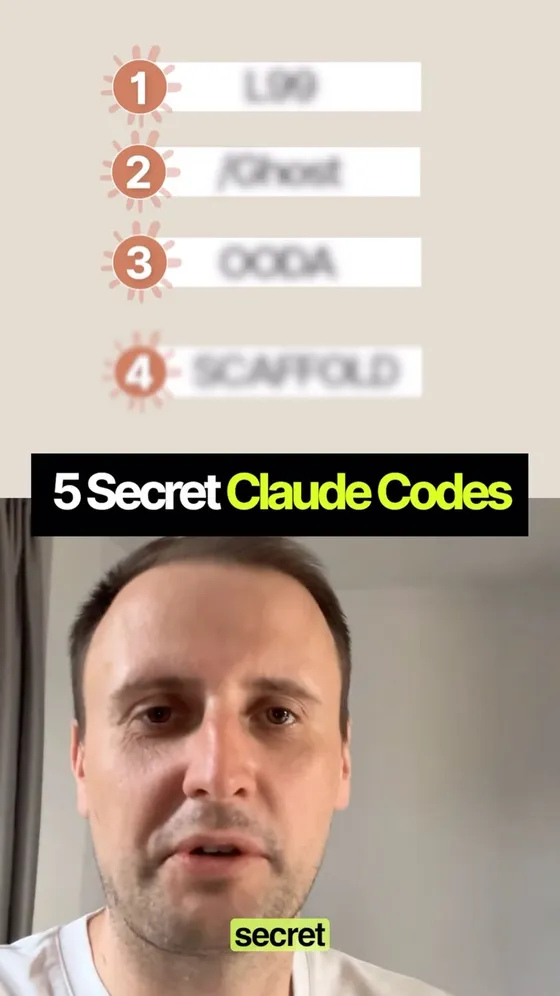
100 shorthand codes for Claude, in eight groups. The full legend is below the summary.
- 🧠 Depth & reasoning (12) — expert-level explanation, assumptions, alternatives and material uncertainty. The custom ULTRATHINK label requests care; it does not establish a model setting.
- 🥊 Challenge & pressure-test (12) — /premortem it's a year later and this failed, why · /redteam · /blindspots · /falsify · /truecost · /nofluff
- ✍️ Writing & voice (14) — /ghost remove generic phrasing · /trim shorten while preserving meaning · /voice follow supplied samples · /noemdash · /human. Style is not proof of authorship.
- 📦 Compression & format (12) — /tldr three lines max · /oneline · /table · /eli5 · /checklist · /brief · /slides
- 🎯 Decision-making (12) — /reversible is this a one-way door · /101010 how it feels in 10 minutes, 10 months, 10 years · /killcriteria · /bet
- 📈 Business & strategy (12) — /moat what's genuinely defensible · /competitor how a rival would beat me · /objections · /uniteconomics · /leverage
- 🛠 Building & technical (12) — /debug hypotheses before touching code · /tests write the tests first · /attacksurface · /edge · /perf · /migrate
- 🎓 Learning & explaining (14) — /feynman explain it, then find where the explanation breaks · /gaps · /misconceptions · /90day · /teach
- 👇 All 100 definitions are below. Use them in the current chat or supported project instructions; check how your app handles slash-prefixed messages.
- ⚡ To reuse a prompt, use the command or skill mechanism documented for your current app. A pasted shorthand legend alone does not install a command.
Context & limitations
These are a custom vocabulary for asking for a particular kind of answer. They can be adapted to other assistants that follow written instructions. They are not a benchmark or a promise of better reasoning.
For actual model effort controls or persistent commands, use the documentation for your app and version. A word in a prompt is not reliable evidence that a hidden setting changed.
Do this yourself
DEPTH & REASONING
L99 — answer for an expert audience; state material uncertainty ULTRATHINK — examine assumptions and alternatives carefully; summarise the conclusion and checks /deep — provide a thorough explanation with key assumptions, calculations and checks /firstprinciples — strip assumptions, rebuild from basics /steelman — give the strongest version of the other side /tradeoffs — name what each option costs /confidence — distinguish evidence, estimates and unknowns; avoid invented confidence percentages /unknowns — what you'd need to know to be sure /secondorder — what happens after what happens /basecase — the boring likely outcome /disagree — test my conclusion; identify supported objections without inventing them /simplify — the simplest explanation that still fitsCHALLENGE & PRESSURE-TEST
/skeptic — challenge the premise first /crit — critique rigorously using evidence and proportionate fixes /blindspots — what am I not seeing /premortem — it's a year later and this failed, why /redteam — attack this plan /devil — give the strongest supported opposing case and its limitations /wrongquestion — am I even asking the right thing /assumptions — surface every unstated one /falsify — what would prove this wrong /overrated — assess whether any claims exceed the evidence /truecost — the all-in cost, including time /nofluff — no encouragement, just the assessmentWRITING & VOICE
/ghost — remove generic phrasing while preserving meaning; make no authorship claim /raw — no markdown, plain text /punch — short sentences, high impact /trim — cut 40%, keep the meaning /hook — ten opening lines, nothing else /voice — match the sample I pasted /human — contractions, fragments, uneven rhythm /noemdash — kill the em-dashes /plain — 8th-grade reading level /spoken — written to be read aloud /caption — Instagram caption format /thread — X thread, one idea per post /rewrite3 — three versions, three angles /cta — five call-to-action variantsCOMPRESSION & FORMAT
/tldr — three lines max /bullets — bullets only /table — comparison table /oneline — one sentence, that's it /eli5 — explain to a smart 12-year-old /steps — numbered steps, no commentary /checklist — turn this into a checklist /template — strip specifics, leave reusable structure /script — turn into a spoken video script /email — tighten into a sendable email /slides — slide-by-slide outline /brief — one-page briefDECISION-MAKING
OODA — observe, orient, decide, act /decide — recommend an option when the evidence is sufficient; otherwise name the missing input /verdict — compare relevant options on equal criteria, then give a proportionate conclusion /reversible — is this a one-way door /101010 — how this feels in 10 minutes, 10 months, 10 years /opportunity — what I give up by choosing this /prioritise — rank by impact vs effort /eisenhower — urgent/important grid /worstcase — model the downside honestly /bet — compare outcomes and assumptions without pretending to have a personal stake /timeline — map this to real dates /killcriteria — what would make me stopBUSINESS & STRATEGY
SCAFFOLD — break into a full action plan /moat — what's genuinely defensible /icp — define the ideal customer sharply /offer — clarify the value proposition without inventing benefits or guarantees /pricing — three models with reasoning /positioning — one-sentence positioning statement /objections — top five and how to answer them /competitor — how a rival would beat me /uniteconomics — model the per-customer maths /gtm — go-to-market on one page /leverage — highest-leverage move this week /scale — what breaks at 10xBUILDING & TECHNICAL
/prd — turn this into a product spec /mvp — smallest version that tests the idea /stack — recommend a stack for my constraints and explain key trade-offs /debug — hypotheses before touching code /refactor — improve without changing behaviour /tests — write the tests first /attacksurface — where this gets exploited /edge — edge cases I haven't handled /walkthrough — this code, line by line /migrate — staged migration plan /perf — distinguish measured bottlenecks from hypotheses /naming — better names for all of theseLEARNING & EXPLAINING
/feynman — explain it, then find where the explanation breaks /analogy — three analogies from three fields /quiz — test me on this /gaps — what's missing in my understanding /roadmap — zero to competent, sequenced /prereq — what I need to know first /misconceptions — what most people get wrong /origin — how we got here /expert — how a specialist frames this /versus — how this differs from the thing I know /worked — one fully worked example /drills — practice to actually get good /90day — 90-day plan to learn it /teach — explain it as if I teach it tomorrowThe legend defines the codes. Use it in a chat or supported project instructions; naming a code does not unlock a hidden model capability.
Want to build this with a teacher?
Pathwise Academy runs small, hands-on AI classes in Singapore for ages 10–17 and adults.