
Check an AI product claim against the research
27 grams, 799 yuan, and a 95% accuracy claim with no published study behind it. Here's how to check a number like that yourself.
By Alan Brown
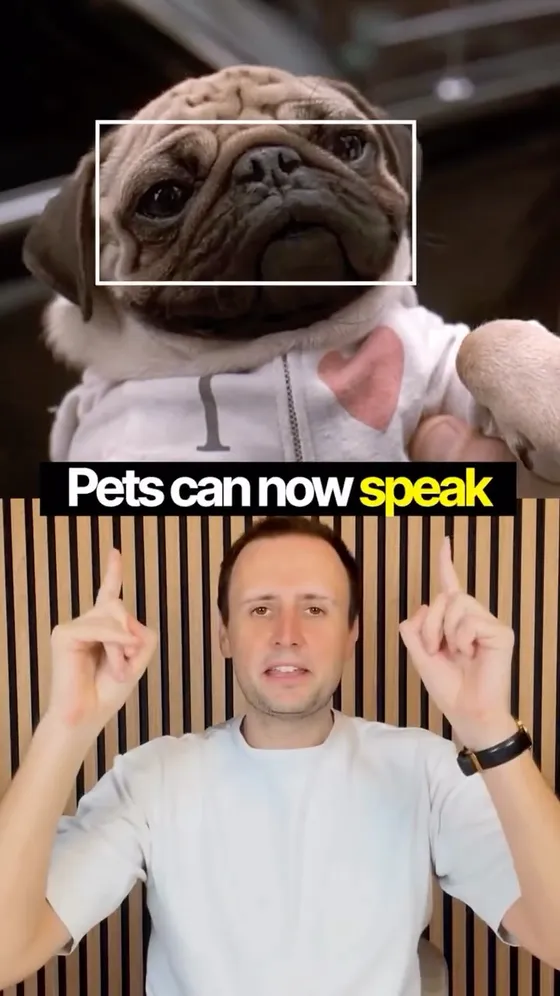
PettiChat is a 27-gram clip-on collar from a Hangzhou startup called Meng Xiaoyi, built on top of Alibaba Cloud's Qwen model.
- 🎤 A tiny mic and a motion sensor feed audio and body language into the model, which maps the pattern to an emotion — hungry, sleepy, anxious, excited — then writes it out as a full sentence on your phone in about 1.2 seconds.
- 📍 It also has GPS, an IP65 splash rating, and a two-way mode that supposedly converts your speech into sounds your pet understands.
- 📊 Trained, the company says, on 1.5 million pet vocalisation samples gathered over two years of testing with 1,000+ cats and dogs.
- 💰 Pre-orders opened mid-May at 799 yuan (about US$118) and crossed 10,000 in China, plus $130k+ on Kickstarter from 800+ backers and $1M in angel funding. Some Western listings show $149. The store is pettichat.store
- 🔍 The accuracy claim breaks down as 94.6% for cats and 92.3% for dogs — so "95%" is rounding up the better of the two numbers. There is no published study behind either.
Context & limitations
The reason a number that high should make you pause: an identical bark can mean play, alert or stress depending on context, which puts a hard ceiling on what audio alone can tell you. BowLingual tried this in the 2000s and MeowTalk more recently. Neither cracked it.
MeowTalk is the closest precedent worth checking, and its roughly 90% figure came from a validation study run by MeowTalk's own team rather than by independent reviewers. Scientific American went through these tools in June 2025 and found peer review still pending on the newest ones, with one psychologist calling direct animal-to-human translation "kind of total nonsense".
Which is the actual lesson, and it isn't about pets: when a company publishes its own accuracy figure and no one else has checked it, the number tells you what they measured, not what the thing does.
Do this yourself
Comparable methods matter more than the biggest number; uncertainty is a valid conclusion. See Humanoid robots beat Usain Bolt's 100m.
Want to build this with a teacher?
Pathwise Academy runs small, hands-on AI classes in Singapore for ages 10–17 and adults.