
Improve a story’s structure and supporting evidence
Review plot, tension, character change and resolution against your story's purpose. These patterns do not prove whether a person or AI wrote it.
By Alan Brown
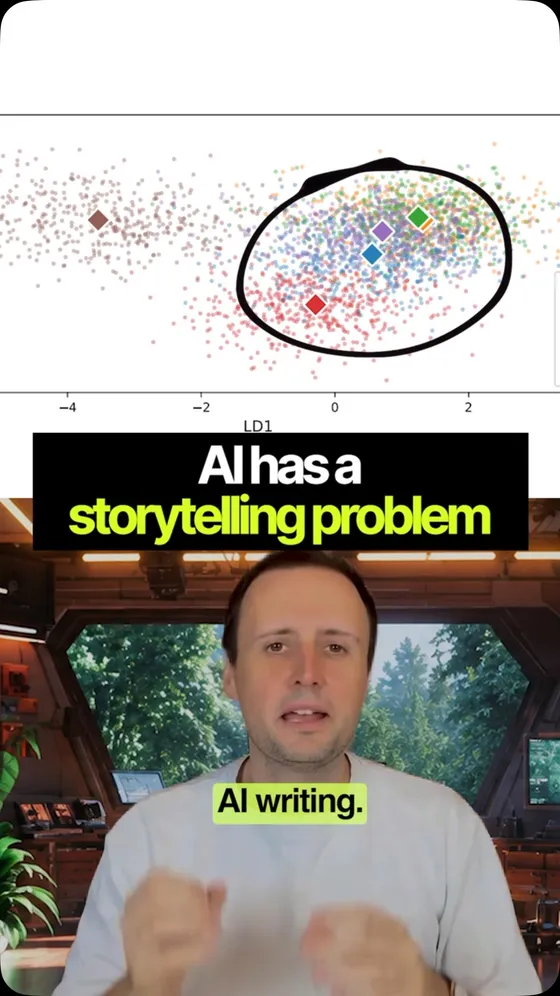
The video raises a useful editing question: what does a story's structure do for its reader? That question can help revision without turning stylistic choices into an authorship test.
- Look at theme, plot threads, character change, tension, resolution and how emotion is conveyed.
- A choice can serve one genre and undermine another. Ask for quotations and an explanation of the effect in your actual story.
- A reported detector result applies to its evaluation setup; it does not establish the author of an individual story.
Context & limitations
Use the prompt to improve the story you want to tell. Preserve structural choices that serve it, and do not rewrite to chase a detector score.
Do this yourself
Structural choices should be judged against the story's purpose; they cannot reliably establish who or what wrote it.
Want to build this with a teacher?
Pathwise Academy runs small, hands-on AI classes in Singapore for ages 10–17 and adults.