
Find useful ideas in a different industry
A Rubik's-cube grid of bins in an Arizona warehouse grows greens in 15 days on 95% less water. The greens are in Whole Foods already — and the grid was built for storing parcels.
By Alan Brown
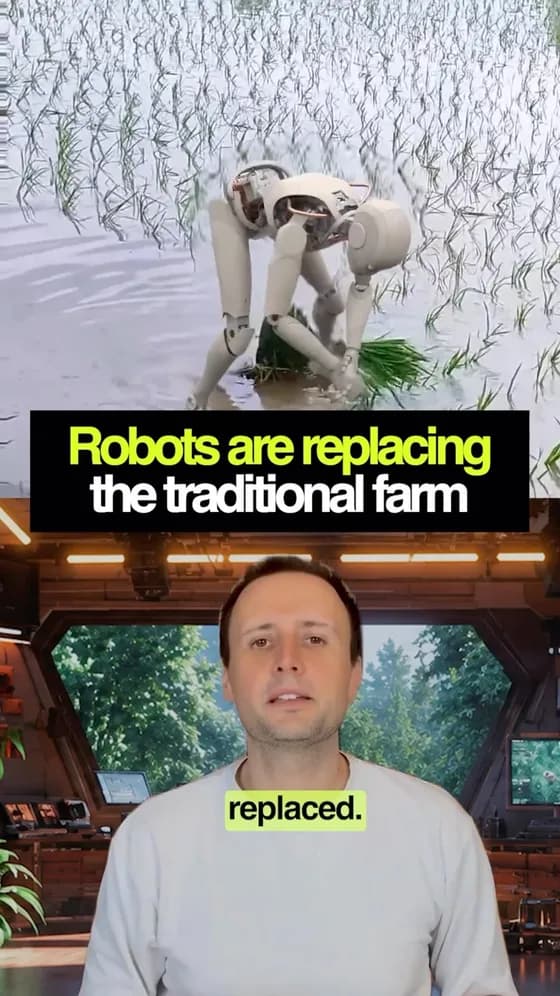
No soil. No sun. No farmers. Lettuce in 15 days. In a warehouse outside Phoenix, robots are growing leafy greens inside bins that ride a giant Rubik's-cube grid. Every bin moves to get the exact LED light and recycled nutrient water it needs, at the exact moment it needs it.
- 🥬 It's called Opollo Farm, built by AutoStore and OnePointOne in Avondale, Arizona, and announced in May 2025 — the release is linked as the source below.
- ⚡ Harvest-ready greens in 15 days, about half the time of traditional farming, using up to 95% less water and with no season to wait for.
- 🛒 Those greens are already on shelves in select Phoenix Whole Foods under the Willo brand. Strawberries and mushrooms are named as next.
- 📦 Here's the bit worth noticing: AutoStore did not build a farming robot. That cubic grid is a warehouse system — it was built to store and pick parcels, and has been running in distribution centres for years. The farm is that same system with plants in the bins instead of stock.
- 🚚 It also deletes the 2,000-mile average trip from farm to distribution centre that the launch release calls out. A farm sitting miles from the store instead of states away changes the maths on what arrives fresh.
Context & limitations
Two things worth being precise about. The launch release doesn't actually say AI — it says "advanced software continuously monitors each plant's status and adjusts conditions in real time". OnePointOne's own descriptions of the Avondale farm do name AI, autonomous robots and cameras inspecting the plants, with operators able to set conditions from up to 2,000 miles away. So it's real, but the AI is doing plant inspection and climate control, not driving the warehouse.
And the food-waste number moves depending on where you measure. FAO's figure for fruit and veg lost between harvest and retail is 25.4% — the highest of any food category. The 40-50% version counts the whole chain, including what shoppers throw out at home. Either way the point survives: produce is the most-wasted thing we grow, and distance is a large part of why.
The lesson isn't lettuce. Farming didn't get automated in a field — it got automated in a warehouse, by someone who stopped trying to build a robot for the job and moved the job somewhere a robot already worked. That question is worth asking about your own week, which is what the prompt does. 🤖
Do this yourself
The value of an analogy depends on what transfers and what does not. Compare with Find the task worth automating.
Want to build this with a teacher?
Pathwise Academy runs small, hands-on AI classes in Singapore for ages 10–17 and adults.