
Pathwise AcademyOnline & In-Person AI ClassesIdea to BuildCreators Club · Ages 10–17Marketing with AI · AdultsCorporate WorkshopsHackathons for SchoolsSingaporeHong Kong
Pathwise AcademyAI classes for kids & adults
Find a class →Log in
← All free guides
Work & careerBeginner · about 15 minFree · no signup

Could a humanoid robot do this part of my job?

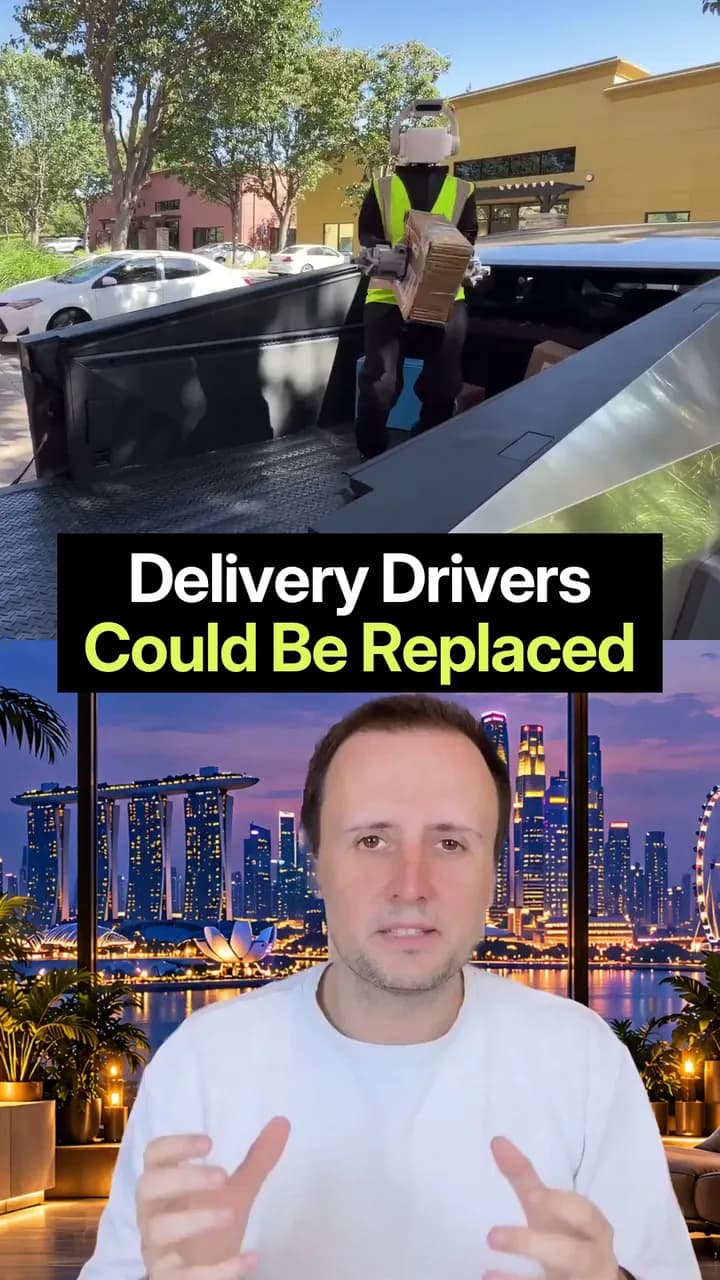
A humanoid carries a parcel from a Cybertruck to the door. Break your own job into steps and see which ones robots can really do today.

By Alan Brown
Jump to the prompt ↓

📦 A humanoid robot just pulled a parcel out of a Cybertruck and carried it to a front door, on its own.

  • 🤖 It runs on OM-1 from Reward AI, a startup founded by Stanford robotics researchers. Their write-up: www.rewardai.com/blog/OM-1/
  • 🧤 Instead of remote-controlling robots to teach them, people wear a sensor glove and simply do the task. The AI learns the grip, the force and the timing from their hands.
  • 🦾 The same model then runs on different robot bodies, from robot arms to humanoids.
  • ⏱️ Reward AI says OM-1 can learn a brand-new task from under 30 minutes of human demonstrations.
  • 📦 The company says it has been tested on real Amazon, Walmart and DHL boxes in different positions.

Context & limitations

These are company demos, and Reward AI hasn't published success rates yet. The prompt below helps you check which parts of a real job robots are actually close to doing.

Do this yourself

I want a realistic check on whether a robot like the humanoids now doing delivery demos could take over part of my work. My job or the task I'm thinking about is ___ . Ask me one question at a time until you understand the task: where it happens, what I pick up or move, how heavy and varied the items are, how often things go wrong, and who I deal with. Stop asking once you have enough. Then break the task into its physical steps. For each step, give: 1. What the step involves (grasping, carrying, stairs, doors, fragile items, talking to people). 2. Whether robots are publicly demonstrating it today, with a link to the company's own video or paper. Label each as "company demo", "independent test" or "in commercial use", and say if success rates have been published. 3. A realistic readiness rating: today, 2–5 years, or not close, with one sentence of reasoning. Finish with: - The two steps most likely to be automated first, and why. - What a human still does in that workflow. - One practical skill I could build that becomes more valuable if those steps are automated. Check current sources for every claim about a robot or company. Don't present a demo as a deployed product, and say plainly where evidence is thin.

Splitting a job into physical steps shows which ones robots are actually demonstrating today, instead of guessing from one viral video.

Want to build this with a teacher?

Pathwise Academy runs small, hands-on AI classes in Singapore for ages 10–17 and adults.